
Negative Pressure Wound Therapy IFU Library
IFU’S : Indications For Use
Below are the top items to read before clinical application of any medical device.
-
Ensure the device is FDA approved.
Verify 510(k) clearance or Premarket Approval (PMA)
-
Always check the product’s Instructions for Use (IFU) for contraindications before applying a wound VAC dressing. Contraindications identify conditions or situations—such as untreated osteomyelitis, necrotic tissue with eschar, malignancy in the wound, exposed blood vessels or organs, and non-enteric/undrained fistulas—where negative-pressure therapy may cause harm. Review patient history, current wound status, and any device-specific limits (pressure ranges, dressing materials, and duration) outlined in the IFU. If any contraindication is present or uncertain, do not proceed—consult the manufacturer’s guidance and the treating clinician to select a safe alternative therapy.
-
Read and follow all warnings and precautions before use. Use only as indicated by the Instructions for Use.
-
Careful following of instructions protects your healing and prevents complications. Read each step fully, use the recommended supplies, keep the area clean and dry, and check dressings on schedule. If anything looks wrong with the wound site contact your clinician immediately. When in doubt, ask for clarification; precise adherence to instructions speeds recovery and keeps you safe.
-
Ensure device compatibility by following the Instructions for Use (IFU) for each component—negative pressure devices, dressings, canisters, and accessories. Verify model numbers, pressure ranges, interface connectors, and sterile status before application. Use only approved combinations and observe manufacturer limits for therapy duration and contraindications. When in doubt, consult the IFU to prevent device malfunction, compromised therapy, or patient harm.
-
Follow the cleaning and maintenance directions exactly to keep your wound vac dressing working safely and effectively. Inspect the device and dressing daily. Improper cleaning can damage functionality if cleaning agent is too harsh.
-
Adverse events are unintended, harmful outcomes that occur during medical treatment or use of a device. They can range from mild reactions to serious complications and should be reported promptly to clinicians and manufacturers. Timely documentation — including what happened, when, and any contributing factors — helps identify patterns, improve patient safety, and guide corrective actions. If you experience or observe an adverse event, seek appropriate medical care immediately and report the event according to facility or regulatory procedures.
Clinicians Must Consult IFU’s
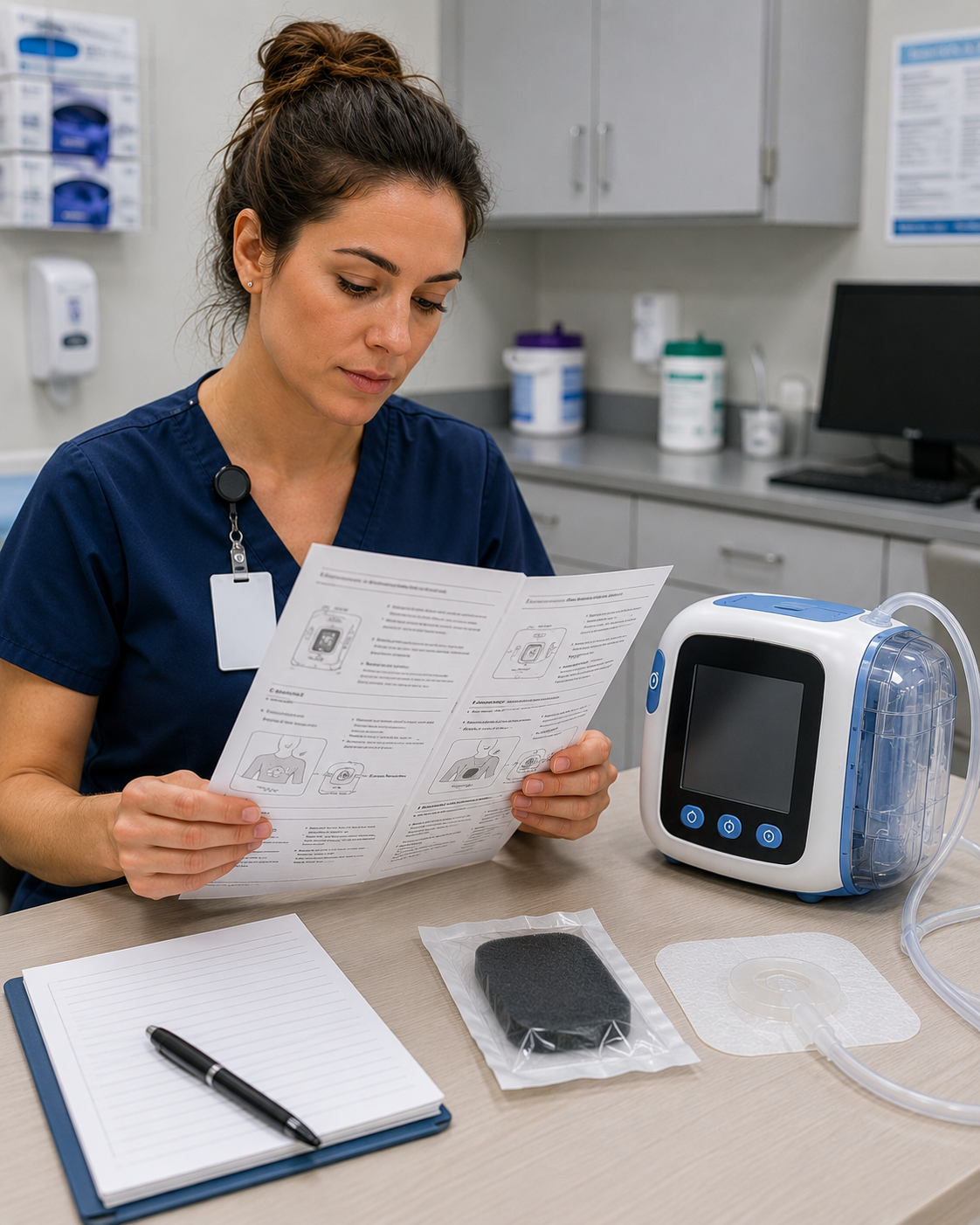
Consult the Instructions for Use (IFU) prior to employing any medical device. The IFU provides essential information on device assembly, correct operation, clinical indications, contraindications, routine maintenance, and troubleshooting procedures. Failure to follow the IFU may result in device malfunction, patient injury, noncompliance with regulatory requirements, and unnecessary resource utilization.
Consider the IFU as the definitive source of device-specific guidance: it delineates performance capabilities, operational limitations, correct clinical application, and appropriate responses to device-related issues. Even clinicians with extensive experience should review the IFU when encountering unfamiliar device models, configurations, or features, as minor variations can affect clinical performance and safety.
Adhere to and document compliance with IFU instructions during device use, and reference the IFU whenever uncertainty arises. This practice protects patient safety, supports caregiver decision-making, and promotes effective, regulatory-compliant clinical care.
NPWT IFU Library
Negative Pressure Wound Therapy System Manuals & Reference Guides
Browse manufacturer IFUs, user manuals, clinician guides, and quick-reference resources for leading NPWT and wound VAC therapy systems.
LEGAL DISCLAIMER: The information provided on this website is for educational and informational purposes only and is not medical, billing, coding, reimbursement, or legal advice. Healthcare providers remain responsible for independent clinical judgment, documentation accuracy, payer verification, and compliance with all applicable laws, regulations, and facility policies.