Frequently asked questions
〰️
Frequently asked questions 〰️
Online Orders Wound VAC Dressing FAQs
What are the different foam colors used in wound VAC therapy?
NPWT systems commonly use black, white, and silver foam dressings. Black foam is typically used for granulation and fluid removal, white foam is often used near delicate structures or tunnels, and silver foam may be used when antimicrobial support is needed.
What is black foam used for?
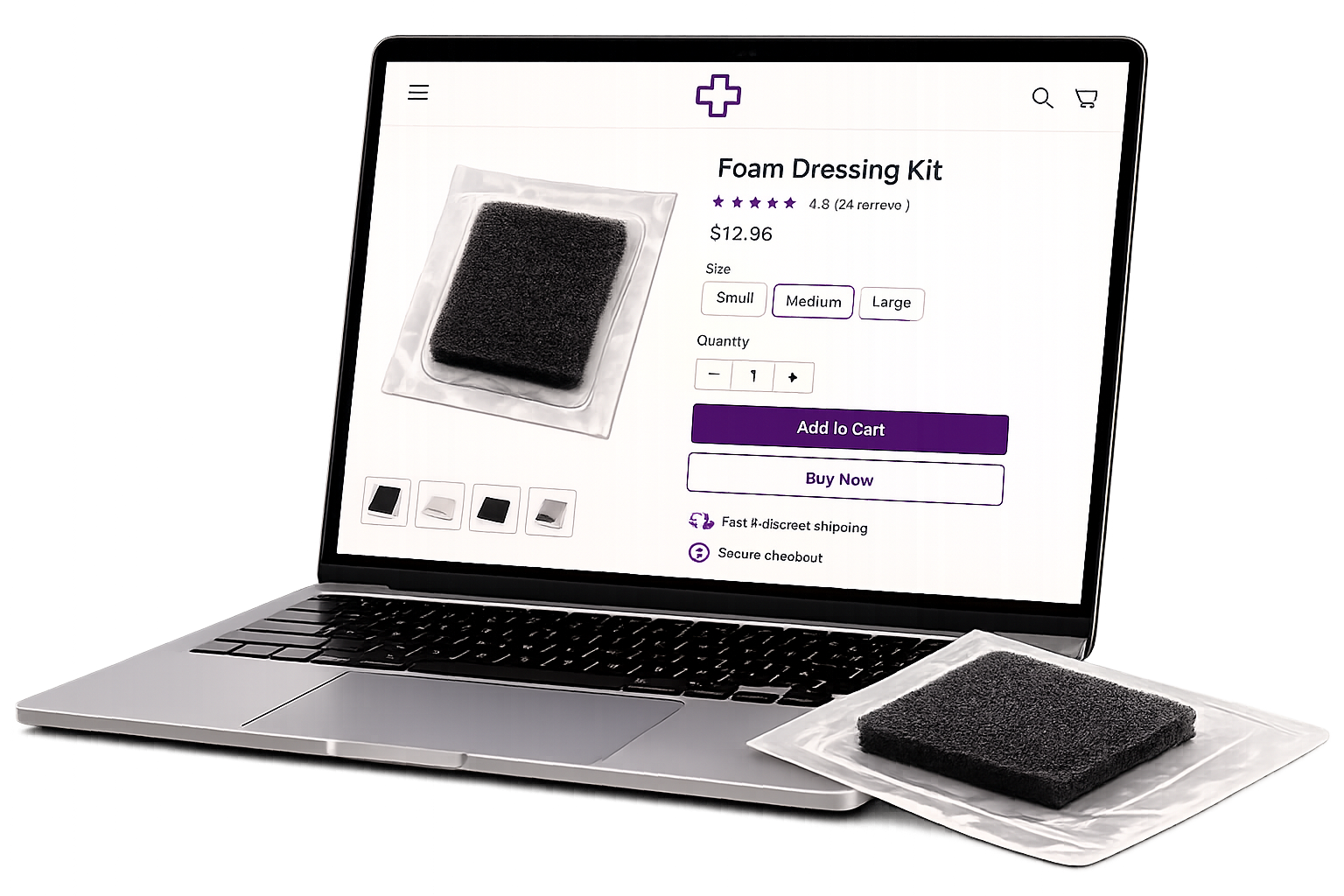
Black foam is usually made from polyurethane and is commonly used for wounds with moderate to heavy drainage. It helps distribute negative pressure and supports granulation tissue formation.
What is white foam used for?
White foam is typically denser and less adherent than black foam. It may be selected for tunnels, undermining, or areas near sensitive structures such as tendon, bone, or exposed tissue, under clinician direction.
What is silver foam used for?
Silver foam contains antimicrobial silver and may be used when a wound has increased bioburden or infection risk. It does not replace antibiotics or professional wound care when those are needed.
Can I use black and white foam together?
In some cases, clinicians may use white foam in sensitive or tunneled areas and black foam above it to support therapy. Foam combinations should be selected by a trained healthcare professional.
Are all wound VAC foams compatible with every NPWT machine?
No. Different manufacturers design their NPWT systems with specific dressings, materials, tubing, connectors, pressure settings, and Instructions for Use. Foam products should not be assumed to be universally interchangeable.
Can one manufacturer’s foam be used with another manufacturer’s pump?
Cross-use may be considered off-label and may affect performance, safety, warranty, reimbursement, or liability. Always follow the manufacturer’s Instructions for Use, facility protocols, and the prescribing clinician’s guidance.
Why does foam compatibility matter?
Foam type, density, pore structure, tubing, drape seal, and pressure delivery can all affect how NPWT performs. Using the wrong dressing may reduce therapy effectiveness or increase the risk of complications.
Do all NPWT systems use foam?
No. Some NPWT systems use gauze-based dressings or proprietary wound interfaces instead of foam. Always verify the dressing type required for the specific system being used.
Are NPWT dressings prescription-only?
Many NPWT systems and components are intended for use under medical supervision and may require a prescription. Customers should confirm product requirements before purchasing.
How do I know which dressing to order?
Confirm the NPWT system brand, dressing type, wound characteristics, prescribed therapy, and dressing change frequency. If unsure, ask your healthcare provider or review the manufacturer’s Instructions for Use.
Does your website guarantee compatibility?
No. Compatibility information is provided for general educational purposes only. Customers should verify product compatibility with the manufacturer’s Instructions for Use, the prescribing clinician, or facility protocol.
Nor-Cal California Health Supplies Service FAQs
What does California Health Supplies provide?
California Health Supplies is a local durable medical equipment provider specializing in Negative Pressure Wound Therapy (NPWT), lymphedema sequential compression pumps, diabetic supplies, and wound care dressings.
Do you provide wound VAC / NPWT supplies?
Yes. We provide NPWT-related supplies including compatible dressing kits, foam dressings, drapes, tubing, canisters, and related wound therapy accessories depending on the prescribed system and product availability.
Are NPWT supplies prescription-based?
Many NPWT products are intended for use under the direction of a licensed healthcare provider. A prescription, wound documentation, and supporting clinical records may be required depending on the product and payer requirements.
Do you help with lymphedema sequential compression pumps?
Yes. We help patients and providers with sequential compression pump options for lymphedema management, including product guidance, documentation support, and coordination based on medical necessity and coverage requirements.
What diabetic supplies do you offer?
We assist with diabetic supply needs such as glucose testing supplies, lancets, test strips, meters, and related items. Product availability may vary based on insurance coverage, prescription requirements, and supplier inventory.
Do you carry wound care dressings?
Yes. We provide wound care dressing supplies such as foam dressings, alginates, hydrocolloids, collagen dressings, gauze, adhesive dressings, bordered dressings, and other wound care products based on clinical need and availability.
Do you accept insurance?
Coverage depends on the patient’s insurance plan, medical necessity, documentation, prescription requirements, and payer guidelines. Our team can help review basic eligibility and documentation needs before an order is processed.
Do you offer cash-pay options?
Yes. Some products may be available through cash-pay purchasing when insurance coverage is not available, not preferred, or not applicable. Pricing and availability may vary by product category.
Can patients order supplies directly?
Patients may contact us directly, but certain products may require a prescription or provider documentation before they can be dispensed. We can help explain what information is needed for the requested item.
Can healthcare providers refer patients to California Health Supplies?
Yes. Providers, discharge planners, wound care clinics, home health agencies, and case managers may refer patients who need NPWT supplies, wound dressings, lymphedema pumps, or diabetic supplies.
Do you deliver locally?
As a local DME supplier, we may offer local delivery or coordinated supply fulfillment depending on the patient’s location, product type, urgency, and availability.
What information is usually needed to start an order?
Typical information may include the patient’s name, date of birth, insurance details, prescription, diagnosis, wound measurements or clinical notes when applicable, provider information, and product request.
How often can supplies be reordered?
Reorder frequency depends on the prescription, product usage, payer rules, and medical necessity. We can help patients understand when they may be eligible for their next supply order.
Do you provide clinical advice?
No. California Health Supplies provides equipment and supply support, but does not replace the advice of licensed healthcare professionals.
How do I get started?
Contact California Health Supplies with your needs, insurance information if applicable, and any prescription or documentation you have. Our team will guide you through the process.